Molecular Hydrogen and Spinal Cord Injuries Potential Benefits for Paraplegic and Quadriplegic Individuals
Our latest blog post dives deep into the clinical potential of Molecular Hydrogen Therapy for people living with paraplegia and quadriplegia. Because of its tiny size, this powerful molecule effortlessly crosses the blood-spinal cord barrier to target the root causes of nerve degradation.
Jim Mitchell founder molecularhydrogenbubbles.com
5/31/20264 min read
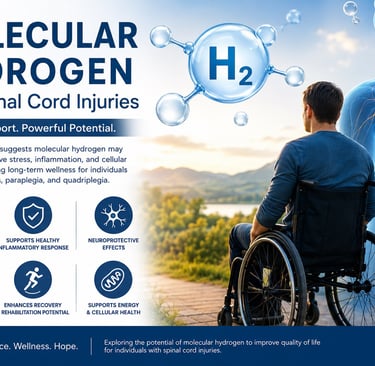
Molecular Hydrogen and Spinal Cord Injuries Potential Benefits for Paraplegic and Quadriplegic Individuals.
For individuals living with paralysis, paraplegia, or quadriplegia, daily life often involves managing far more than mobility challenges. Secondary complications such as chronic inflammation, oxidative stress, nerve damage, muscle atrophy, fatigue, circulation issues, pressure injuries, and chronic pain can significantly affect quality of life.
As interest in molecular hydrogen continues to grow within the medical and wellness communities, researchers are investigating its potential role as a supportive therapy for neurological conditions, including spinal cord injuries. While molecular hydrogen is not a cure for paralysis, emerging research suggests it may help address some of the underlying biological processes associated with spinal cord injury and long-term neurological dysfunction.
Understanding Secondary Damage After Spinal Cord Injury
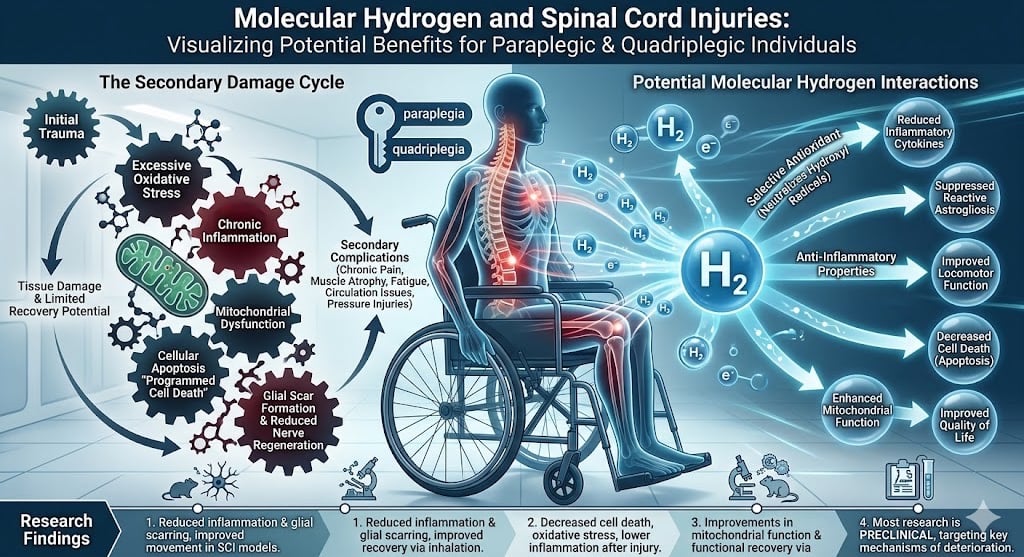
When a spinal cord injury occurs, the initial trauma is only part of the problem. In the hours, days, and even years that follow, the body experiences what researchers call "secondary injury," which involves. Excessive oxidative stress, chronic inflammation, mitochondrial dysfunction, cellular apoptosis "programmed cell death", formation of glial scars, reduced nerve regeneration. These processes can contribute to ongoing tissue damage and may limit recovery potential. Researchers have found that molecular hydrogen may help reduce several of these damaging mechanisms through its selective antioxidant and anti inflammatory properties. Studies suggest hydrogen can neutralize harmful hydroxyl radicals while preserving beneficial cellular signaling molecules.
Molecular Hydrogen and Spinal Cord Injury Research.
Researchers investigating hydrogen-rich saline in spinal cord injury models found that molecular hydrogen reduced inflammatory cytokines, suppressed reactive astrogliosis, and improved locomotor function compared to untreated controls. The study concluded that hydrogen may serve as a neuroprotective agent following spinal cord injury. Another study reported that hydrogen-rich saline reduced cell death, decreased oxidative stress markers, lowered inflammation, and improved motor recovery after spinal cord injury in experimental animals. Additional research involving hydrogen inhalation found improvements in mitochondrial function, reduced neuronal apoptosis, decreased oxidative damage, and enhanced functional recovery in spinal cord injury models. Although most spinal cord injury research remains preclinical, the findings continue to attract attention because they target mechanisms known to contribute to long-term neurological deterioration.
Potential Benefits for Paraplegic and Quadriplegic Individuals
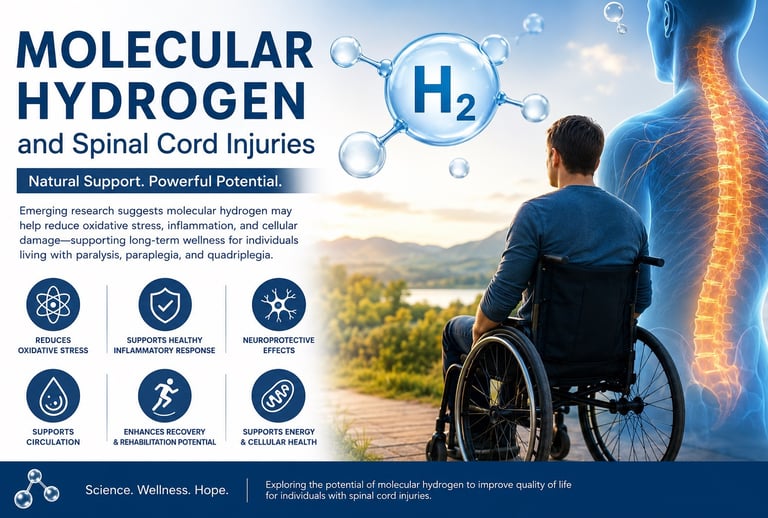
Reduction in oxidative stress, Individuals with spinal cord injuries often experience elevated oxidative stress levels. Oxidative stress can contribute to cellular damage, accelerated aging, chronic inflammation, reduced tissue repair. Molecular hydrogen has been extensively studied for its ability to selectively reduce harmful oxidative molecules without disrupting normal cellular processes.
Support for Healthy Inflammatory Response
Chronic low grade inflammation is common among individuals living with paralysis. Research suggests hydrogen may help modulate inflammatory pathways and reduce inflammatory cytokines that contribute to tissue damage and discomfort.
Neuroprotective Effects
One of the most exciting areas of hydrogen research involves neuroprotection. Scientists have observed that molecular hydrogen can help protect neurons from oxidative damage, support mitochondrial health, reduce apoptosis and preserve nervous system function. These mechanisms have been demonstrated across multiple neurological disease models.
Potential Circulation Support
Reduced mobility often affects circulation throughout the body. While direct human research in spinal cord injury populations remains limited, molecular hydrogen has been studied for its effects on vascular health and endothelial function. Improved cellular health and reduced oxidative stress may indirectly support healthy circulation.
Improved Recovery and Rehabilitation Potential
Many rehabilitation specialists recognize that recovery depends on creating an environment that supports healing. By helping reduce oxidative stress, inflammation, and cellular damage, molecular hydrogen may help create more favorable conditions for rehabilitation programs and physical therapy efforts. However, more human clinical trials are needed to determine the extent of these benefits.
Support for Long Term Wellness
For individuals living with chronic paralysis, health maintenance becomes critically important. Molecular hydrogen is currently being studied for its potential effects on energy production, mitochondrial function, muscle recovery, Cognitive health, sleep quality, systemic inflammation, These areas may be particularly relevant for individuals facing the long-term health challenges associated with spinal cord injuries.
Ways Individuals Use Molecular Hydrogen, common delivery methods include Hydrogen Gas Inhalation, many users inhale molecular hydrogen gas through a nasal cannula using a hydrogen generator. Hydrogen rich water hydrogen dissolved in drinking water offers a convenient daily option.
Hydrogen Baths hydrogen infused baths may provide full body exposure and are increasingly used in wellness settings. Hydrogen foam hydrogen infused foam products are sometimes applied directly to the skin to support localized tissue health and skin wellness.
Important Considerations
It is important to emphasize that molecular hydrogen is not currently approved as a treatment for paralysis, paraplegia, or quadriplegia. Most spinal cord injury studies have been conducted in laboratory and animal models, and more human clinical research is needed. Individuals should always consult their healthcare providers before adding any new therapy to their wellness program.
The Future of Molecular Hydrogen in Neurological Health
Research into molecular hydrogen has expanded dramatically over the past two decades. Scientists continue to investigate its role in spinal cord injury, traumatic brain injury, stroke recovery, neurodegenerative diseases, chronic inflammation and mitochondrial dysfunction. the growing body of evidence suggests molecular hydrogen may become an important supportive tool in neurological wellness and rehabilitation programs in the years ahead.
Learn More
For individuals interested in the science of molecular hydrogen, these resources provide extensive research databases and educational materials. Molecular Hydrogen Institute PubMed Hydrogen Research Database National Center for Biotechnology Information (NCBI)
If you or a loved one is living with paraplegia or quadriplegia and would like to learn more about molecular hydrogen technology, hydrogen inhalation systems, hydrogen water, or hydrogen wellness protocols, contact our team today. We can help you understand the available options and point you toward educational resources so you can make informed decisions about whether molecular hydrogen belongs in your wellness journey.
Written by
Jim Mitchell
Founder molecularhydrogenbubbles.com