Molecular Hydrogen Foam and Psoriasis Could This Emerging Therapy Help Calm Inflamed Skin?
Molecular hydrogen, foam, and psoriasis. A comprehensive breakdown on the effects of using molecular hydrogen foam to manage the effects of psoriasis.
Jim Mitchell founder molecularhydrogenbubbles.com
5/28/20264 min read
Molecular Hydrogen Foam and Psoriasis could this emerging therapy help calm inflamed skin?
Psoriasis is more than just a skin condition. For millions of people, it is a daily struggle involving inflammation, itching, redness, scaling, discomfort, and emotional stress. While traditional treatments can help manage symptoms, many people continue searching for gentler and more supportive approaches to skin wellness.
One emerging area of interest is molecular hydrogen foam therapy.
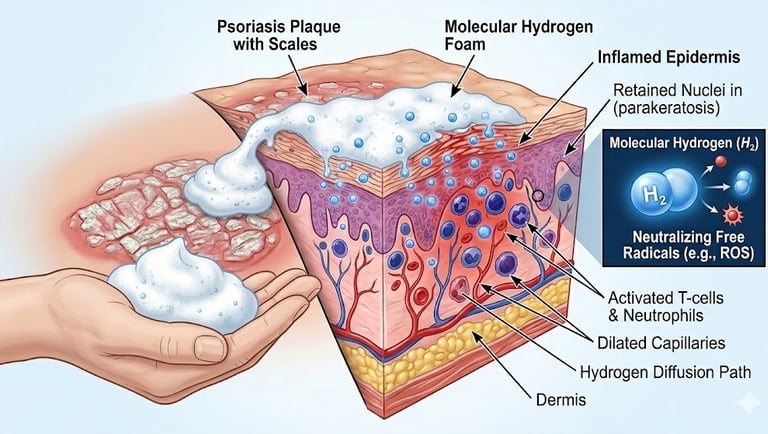
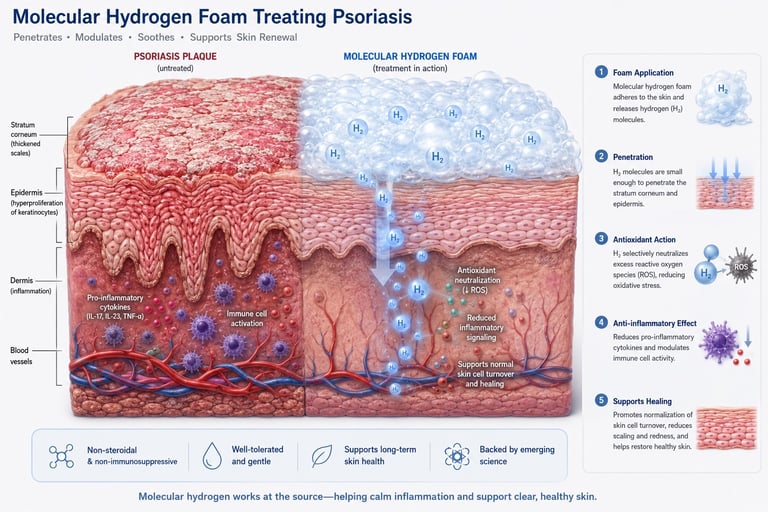
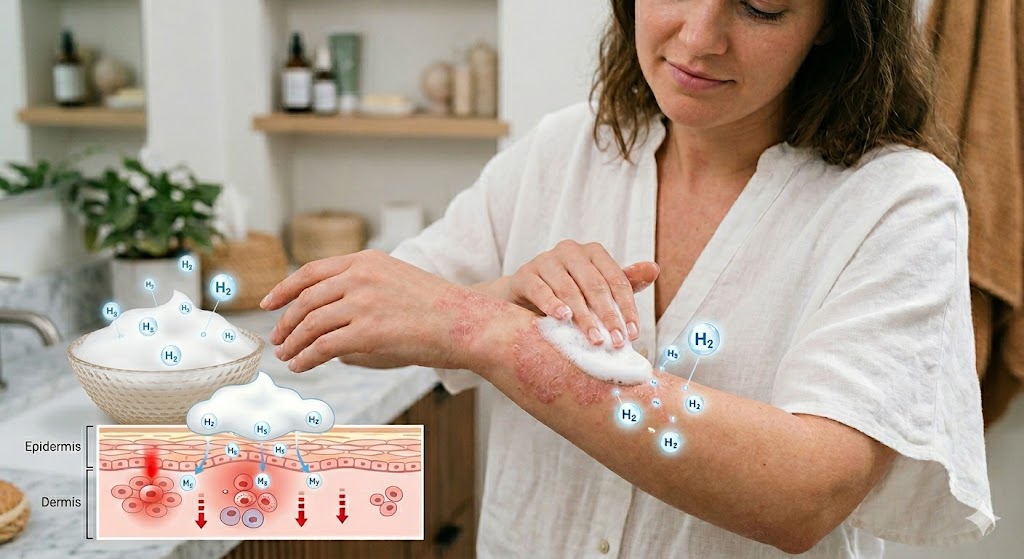
Molecular hydrogen foam combines dissolved molecular hydrogen gas (H₂) with a stable topical foam that clings to the skin for extended periods of time. Instead of quickly evaporating like water alone, the foam creates a hydrogen-rich microenvironment directly on irritated skin surfaces. Researchers are now investigating whether molecular hydrogen may help address some of the underlying inflammatory and oxidative stress mechanisms associated with psoriasis.
Understanding Psoriasis and Oxidative Stress
Psoriasis is widely recognized as a chronic inflammatory immune mediated condition. One major contributor involves oxidative stress an imbalance between harmful free radicals and the body’s natural antioxidant defenses. Excessive oxidative stress can contribute to skin cell overproduction persistent inflammation redness and irritation, tissue damage and Increased flareup and severity.
Because molecular hydrogen selectively targets some of the most damaging reactive oxygen species while supporting normal cellular signaling, scientists have become increasingly interested in its dermatological potential. What Research Says About Molecular Hydrogen and Psoriasis Recent scientific studies have produced promising findings.
A 2026 study published in Clinical and Experimental Immunology found that molecular hydrogen reduced inflammatory cytokines, oxidative stress markers, and abnormal skin-cell proliferation associated with psoriasis-like inflammation. Researchers suggested molecular hydrogen may represent a potential therapeutic strategy for psoriasis-related skin inflammation.
Another clinical report documented improvements in psoriasis symptoms and psoriasis associated arthritis following hydrogen based therapy in several patients. While these studies are still early and more research is needed, the findings support growing interest in hydrogen as a possible complementary wellness approach for inflammatory skin conditions.
Why Foam Delivery is Important
Hydrogen baths have become popular in wellness communities, but foam delivery may offer unique practical advantages for psoriasis sufferers. Hydrogen foam remains in contact with the skin longer reduce hydrogen escape into the air allow targeted application to plaques and inflamed areas provide a soothing cooling sensation. It requires far less water than immersion baths. For people dealing with localized psoriasis patches, foam allows more direct and efficient exposure to hydrogen contact with skin.
.
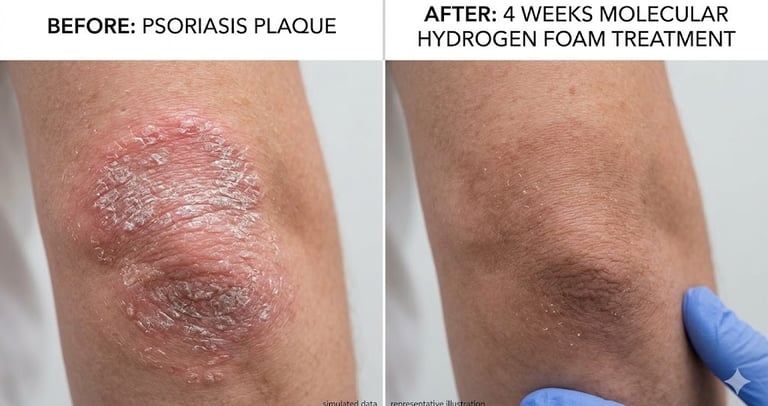
Benefits users often report although experiences vary, many users describe softer skin texture reduced dryness and redness improved comfort less irritation after flare ups better skin hydration. These observations are largely anecdotal at this stage, but they align with ongoing scientific interest surrounding hydrogen’s anti-inflammatory properties. PubMed: Psoriasis Case Report with Molecular Hydrogen
A Balanced Perspective
It is important to understand that molecular hydrogen foam is not currently considered a cure for psoriasis. Research remains ongoing, and larger human clinical trials are still needed. However, the science behind molecular hydrogen continues expanding rapidly, particularly in areas involving inflammation, oxidative stress, and tissue recovery.
For people seeking supportive wellness strategies alongside professional medical care, hydrogen foam may represent a promising new frontier in topical skin therapy.
Learn more
Clinical and Experimental Immunology Study on Hydrogen and Psoriasis
PubMed: Hydrogen and Psoriasis Research
PubMed: Psoriasis Case Report with Molecular Hydrogen
If you or someone you love struggles with psoriasis, you know how exhausting the cycle of flare-ups, irritation, and discomfort can be. While molecular hydrogen foam is still an emerging area of research, the growing scientific interest surrounding its anti inflammatory and antioxidant potential is hard to ignore. Exploring new wellness approaches starts with education. Stay informed, follow the latest research, and speak with a qualified healthcare professional before beginning any new skin therapy. The future of skin wellness may not lie in harsher treatments but in supporting the body at the cellular level. Discover the science and explore the possibilities. Your skin deserves every opportunity to heal, recover, and thrive.
Coming up in skin related posts molecular hydrogen foam therapy.
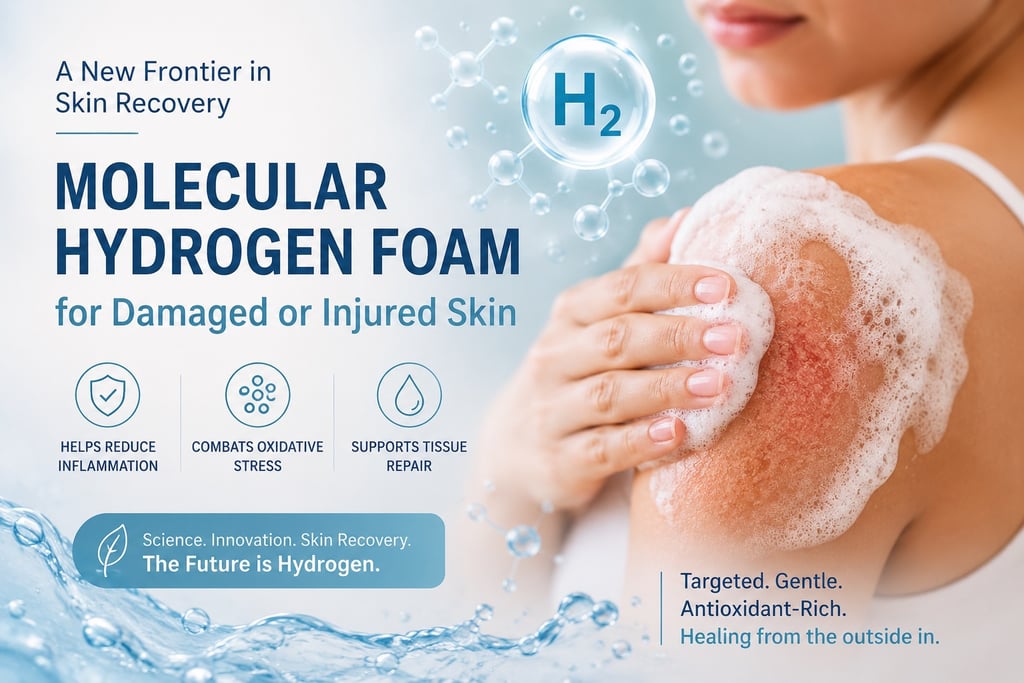
Damaged skin does more than hurt on the surface. Beneath every burn, abrasion, irritation, or environmental injury, the body enters a battle against inflammation and oxidative stress. What if one of the smallest molecules in existence could help support the skin’s natural recovery process? Molecular hydrogen foam is emerging as a fascinating new approach in regenerative skin wellness. By delivering hydrogen-rich foam directly onto injured or stressed skin, researchers are exploring whether this antioxidant rich environment may help calm inflammation, reduce oxidative damage, and support tissue repair. From burns and irritated skin to post procedure recovery, interest in hydrogen-based skin therapy is rapidly growing. Could this simple foam become part of the future of skin recovery? Discover the science, the research, and the exciting possibilities behind molecular hydrogen foam for damaged or injured skin.
Written by
Jim Mitchell
founder molecularhydrogenbubbles.com