Molecular Hydrogen Machine Showing a TDS Warning After Shipping? Here’s What May Have Happened
Left your hydrogen machine dry during shipping or storage and now seeing a TDS error? Before assuming it’s broken, try this step-by-step recovery guide to rehydrate the membrane and clear the warning.
Jim Mitchell founder molecularhydrogenbubbles.com
5/29/20263 min read
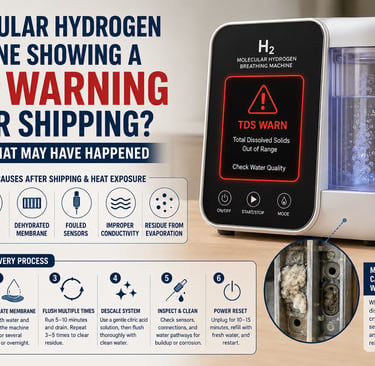
Molecular Hydrogen Machine Showing a TDS Warning After Shipping? Here’s What May Have Happened
Molecular hydrogen breathing machines are precision devices that rely on clean water pathways, properly hydrated membranes, and stable conductivity levels to operate correctly. Occasionally, after a machine has been stored, shipped long-distance, or left unused for extended periods, users may encounter a TDS trip or a similar error message when restarting the system.
One common situation occurs after overseas shipping during hot weather conditions. If a molecular hydrogen machine sat in transit for several weeks and dried out internally, the unit may struggle to restart normally once the powered is turned back on. Fortunately, in many cases, the issue can be resolved with proper flushing, rehydration, and cleaning procedures.
What Does a TDS Warning Mean?
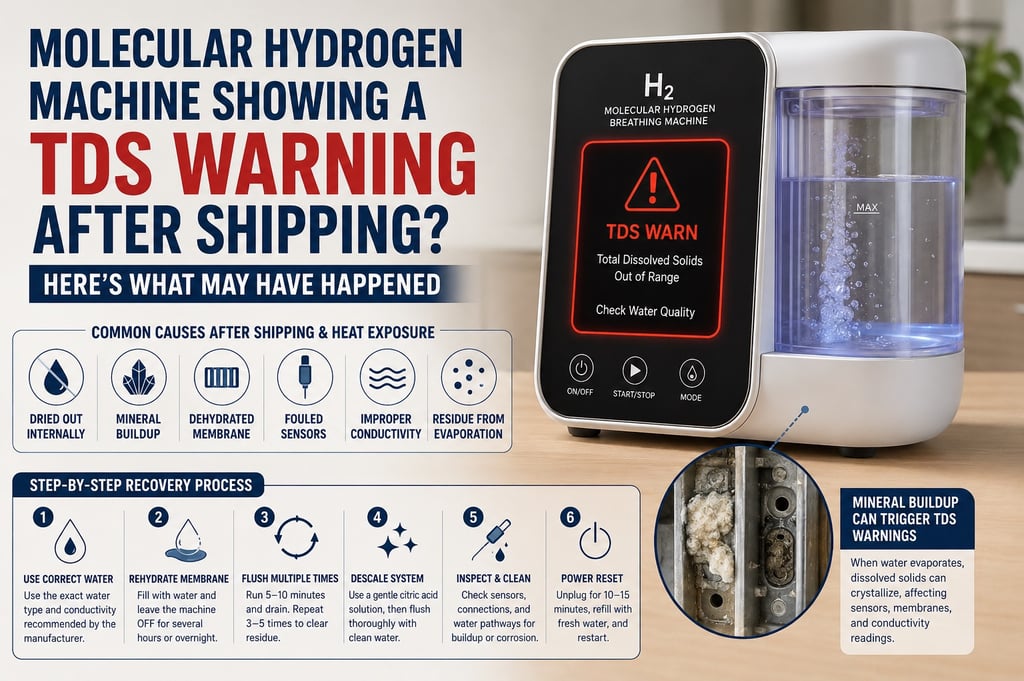
“TDS” stands for Total Dissolved Solids. In hydrogen-generating equipment, the system monitors water conductivity and purity to ensure the electrolytic cell can operate safely and efficiently. A TDS warning may indicate. Mineral buildup inside the machine, Improper water conductivity, Dehydrated membranes or electrolysis cells, Fouled sensors, Residue left behind after water evaporated Internal scaling from previous use. When a machine dries out completely, especially in warm temperatures, minerals and dissolved solids can crystallize inside the unit and interfere with normal operation. Why Shipping and Heat Can Cause Problems
Many molecular hydrogen systems contain sensitive internal components such as PEM membranes, Electrolysis chambers, Conductivity sensors, Fine water pathways and Electrodes. During long shipping periods, especially in summer heat, residual water inside the system may slowly evaporate. As this happens Mineral residue can harden, Membranes may dehydrate, Sensors can become coated, Internal conductivity readings may become inaccurate. When the machine is restarted, the system may immediately detect abnormal conditions and trigger a warning.
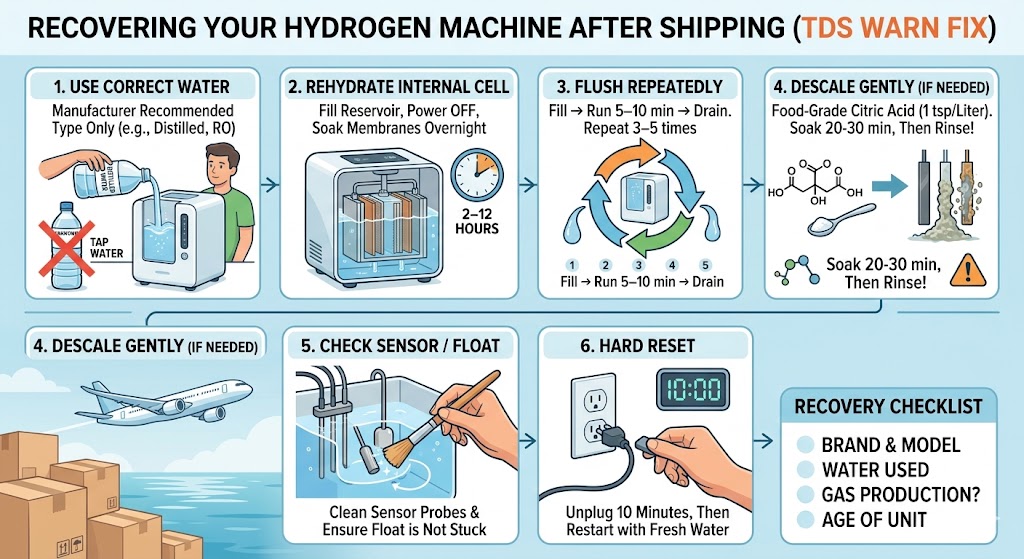
Here is a step by step recovery process
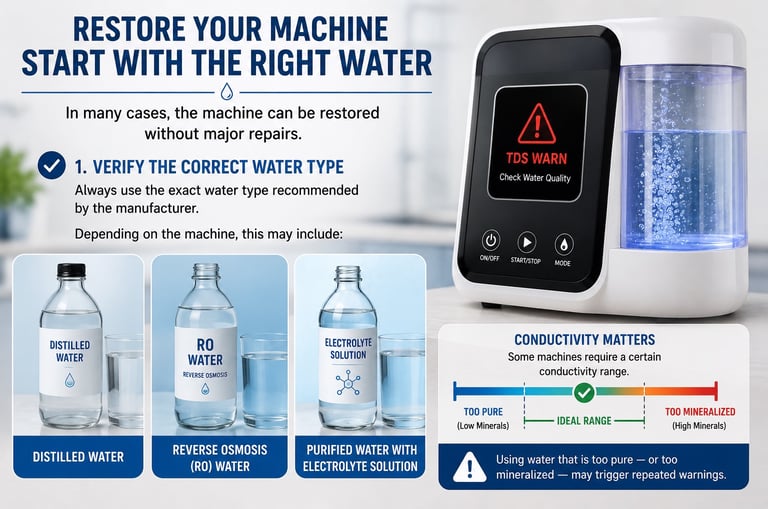
In many cases, the machine can be restored without major repairs. Verify the correct water type. Always use the exact water type recommended by the manufacturer. Depending on the machine, this may include distilled water reverse osmosis (RO) water purified water with electrolyte solution some machines require a certain conductivity range. Using water that is too pure or too mineralized may trigger repeated warnings.
Rehydrate the Internal Membrane
If the machine contains a PEM membrane, drying out may temporarily affect performance. Try this fill the reservoir with the correct water. Leave the machine powered OFF for several hours or overnight. Allow the internal components time to rehydrate naturally. This alone can sometimes restore proper operation.
Perform Multiple Flush Cycles
Flush the system repeatedly to remove old residue. A typical process, fill the machine, run for 5-10 minutes drain completely repeat 3-5 times. This may help clear contaminants and stabilize sensor readings.
Descale the system
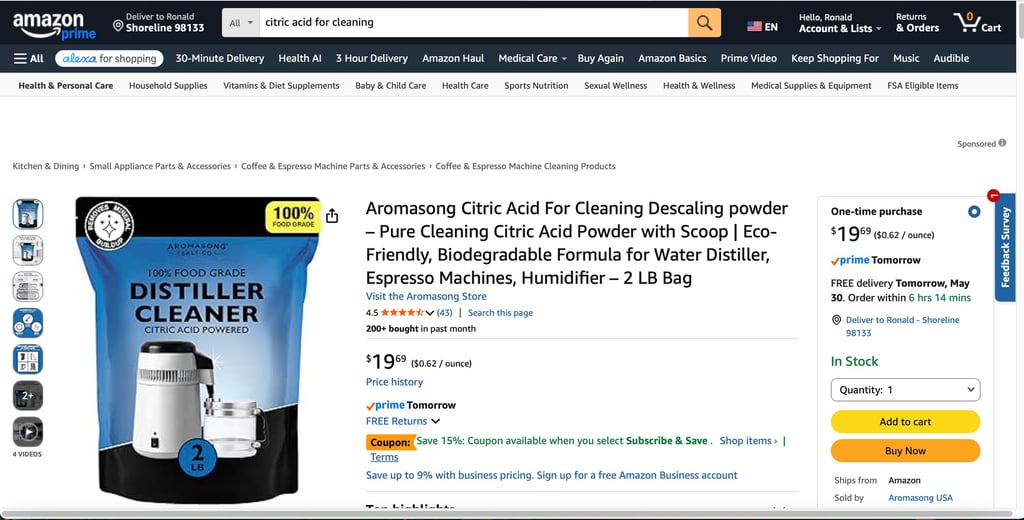
If warnings continue, mineral scaling may be present. A gentle citric acid cleaning solution is often effective.
Example Cleaning Solution 1 teaspoon food-grade citric acid, 1 liter warm water. Allow the solution to circulate or soak according to manufacturer guidelines, then flush thoroughly several times with clean water afterward. Avoid harsh cleaners unless specifically approved for the device.
Inspect Sensors and Connections
If your molecular hydrogen breathing machine displays a TDS warning after long distance shipping or extended storage, the issue may be caused by internal drying, mineral buildup, or dehydrated membranes. These machines rely on stable water conductivity, hydrated PEM membranes, and clean internal pathways to function correctly.
To summarize
During overseas shipping especially in hot weather residual water inside the system can evaporate, leaving behind mineral residue and scaling that interfere with conductivity sensors and electrolysis chambers. When the machine is restarted, it may immediately trigger a TDS warning due to abnormal readings. Fortunately, many machines can often be restored without major repairs by following a careful recovery process.
This may include
Using the manufacturer’s recommended water type, allowing internal membranes to rehydrate, performing multiple flush cycles, descaling the system with a gentle citric acid solution, inspecting sensors and internal connections, in many cases, patience and proper cleaning can bring the machine back online and restore normal operation.
If your molecular hydrogen machine is showing a persistent TDS warning after shipping or storage, do not panic. The issue may be recoverable with proper flushing, rehydration, and maintenance. Always follow manufacturer guidelines and avoid harsh cleaning chemicals. If problems continue after multiple recovery attempts, contact a qualified service provider or the manufacturer for further diagnostics and support before attempting major repairs.
Written by
Jim Mitchell
founder molecular hydrogenbubbles.com