The 2 to 4% rule a simple method for calculating how much molecular hydrogen in milliliters per minute do you need to stay safe and be therapeutic.
How to use AI to calculate milliliters per minute for any size human being.
Jim Mitchell founder molecularhydrogenbubbles.com
4/4/20264 min read
The 2–4% Rule A Simple Guide to Safe & Effective Molecular Hydrogen Therapy.
Molecular hydrogen therapy is rapidly gaining attention for its potential wellness benefits from supporting recovery to reducing oxidative stress. But like any therapeutic modality, effectiveness depends on proper dosing.One of the most important principles to understand is the 2-4% rule a simple, practical guideline that ensures both safety and therapeutic benefit when inhaling hydrogen gas.
What Is the 2–4% Rule?
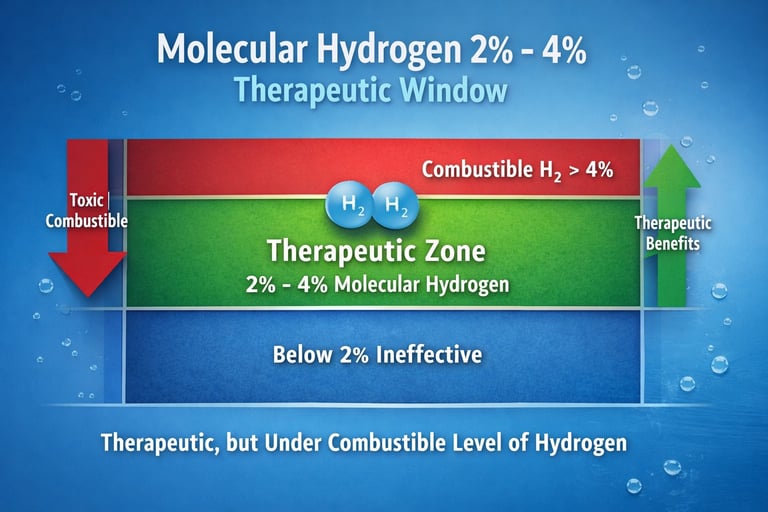
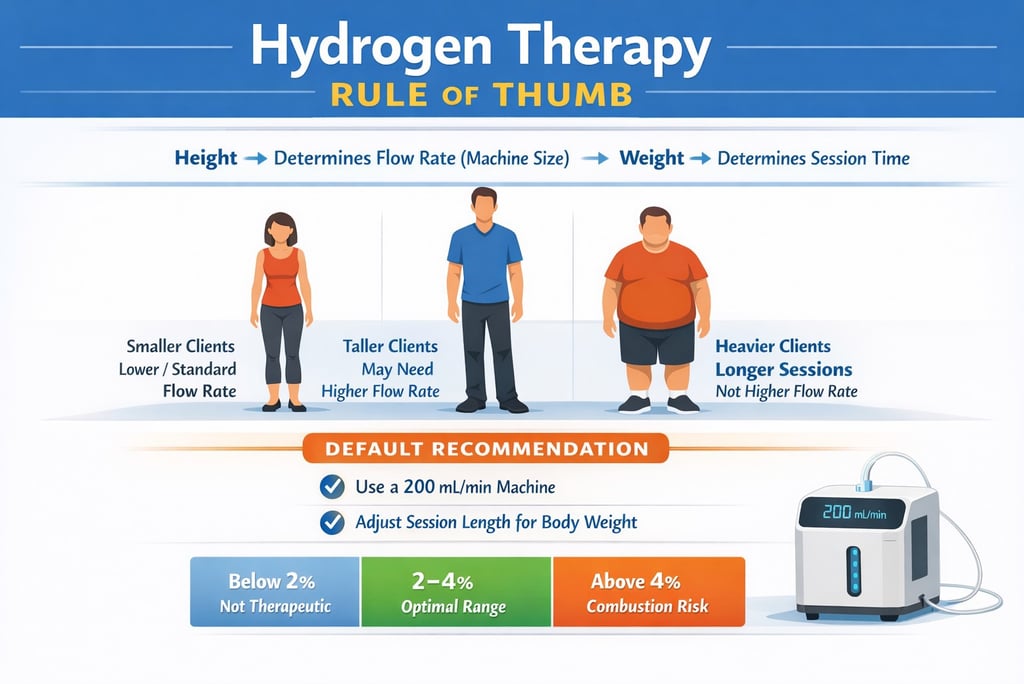
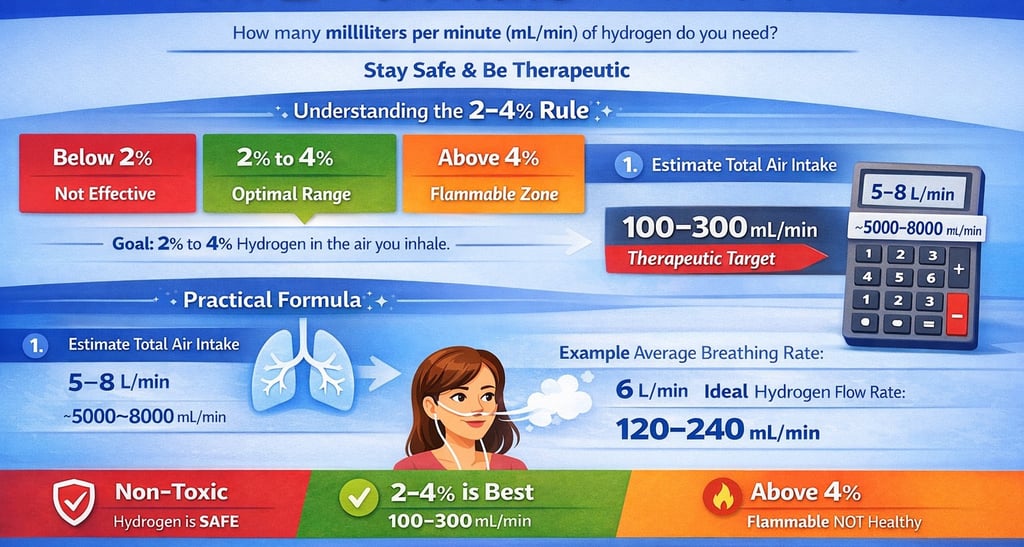
The 2–4% rule refers to the concentration of hydrogen gas in the air you inhale. Below 2% is not therapeutically effective 2%-4% is optimal therapeutic range. Above 4% enters the flammable range this range is critical because hydrogen behaves differently depending on concentration. At low levels, it’s biologically inactive, at optimal levels, it acts as a selective antioxidant. At higher levels, it becomes combustible in air.
Why 2-4% matters, hydrogen is unique It selectively targets harmful free radicals especially hydroxyl radicals without disrupting beneficial signaling molecules. However, your body only responds when enough hydrogen is present. That’s why too little is no real benefit just right 2-4% is therapeutic and effective. Too much above 4% can be affective, but it does carry unnecessary risk of flammability.
Converting Percentage into mL/Minute (The Practical Formula)
Most hydrogen therapy devices measure output in milliliters per minute (mL/min). So how do you translate the 2-4% rule into real numbers? Here’s is simple method.
Use chat, GPT to determine the size of machine and the full rate of different sized people.
Here is a simple, repeatable prompt that produces consistent, safe, easy-to-understand outputs.
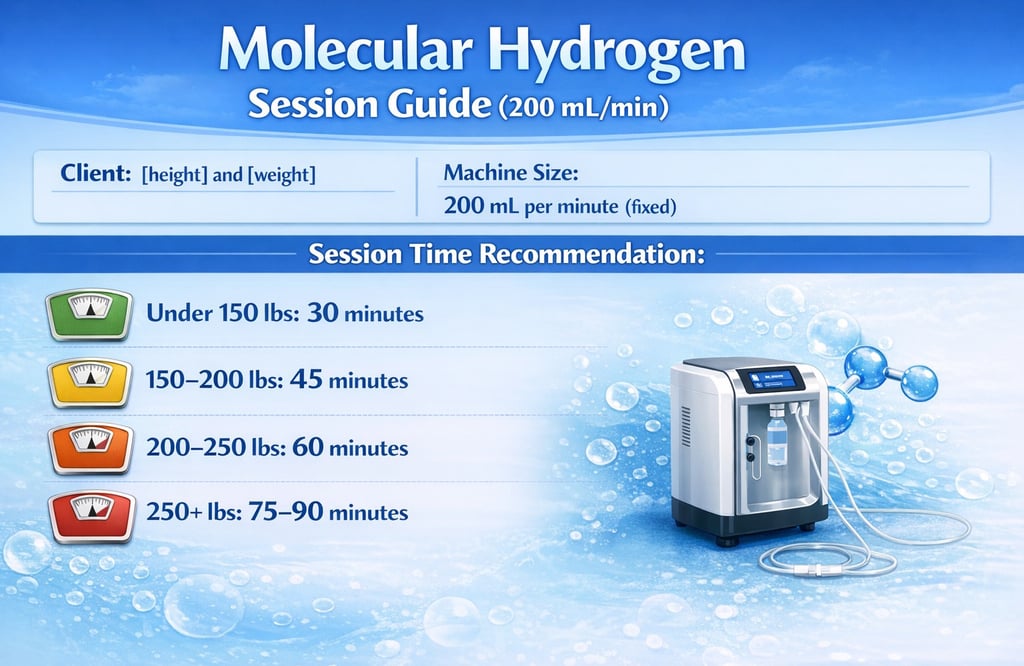
Client is [height] and [weight]. I am using a molecular hydrogen machine size (200mL per minute), and how long should the session be? Keep hydrogen within 2–4%. Do not increase flow rate for weight—only adjust session time.
Molecular Hydrogen Session Guide (200 mL/min)
Client [height] and [weight] [ machine Size 200 mL per minute fixed].
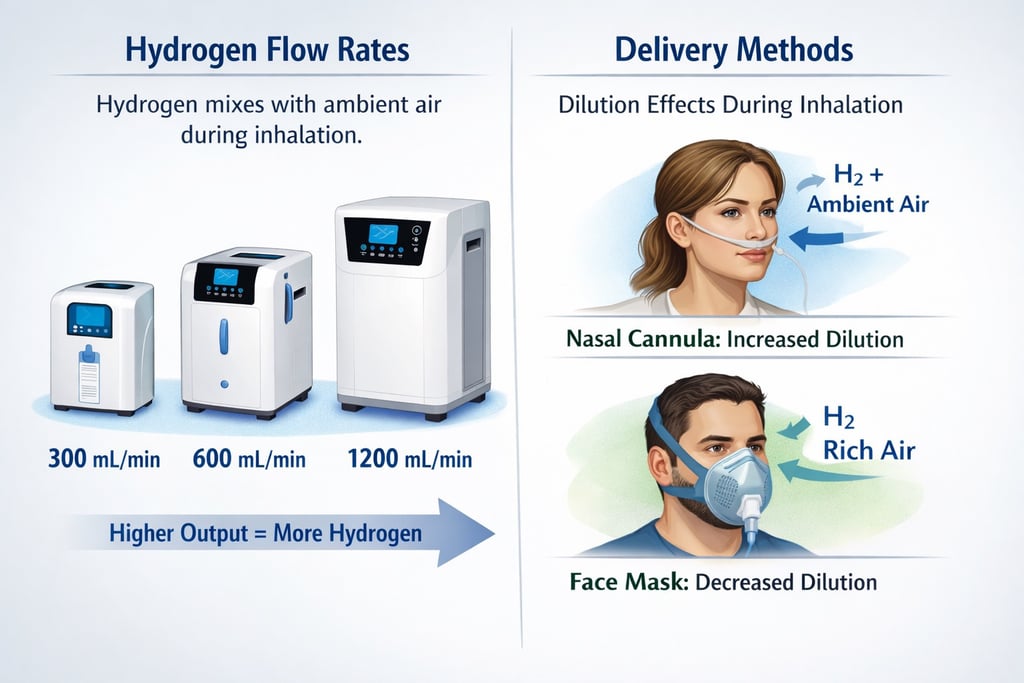
What About Higher Output Machines? Some devices produce 300 mL/min 600 mL/min or more does that mean they’re unsafe? Not necessarily because hydrogen mixes with ambient air during inhalation. The delivery method also matters (nasal cannula vs mask) this will affect dilution a mask covering the nose and mouth decreases the dilution a nasal cannula will increase delusion.
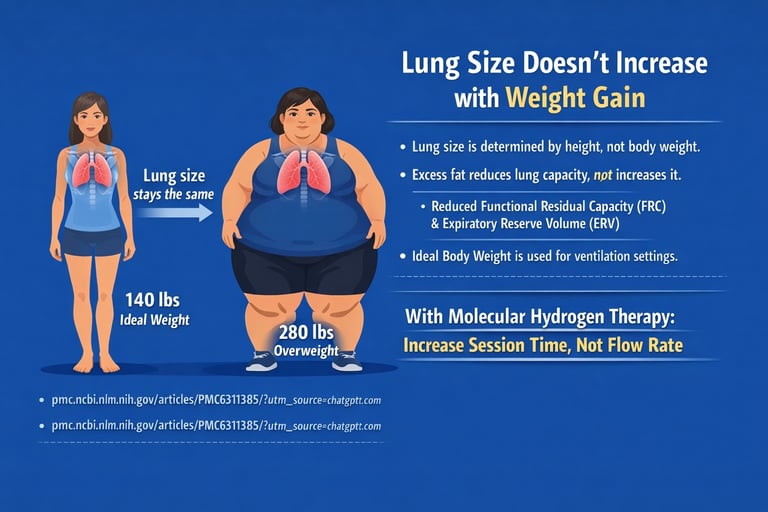
A person’s lung size is primarily determined by their height, sex, and chest cavity not by how much body fat they carry so gaining weight does not cause the lungs to grow larger to meet increased oxygen demand. In fact, research shows the opposite excess body fat places mechanical pressure on the chest and diaphragm, which can reduce functional lung volumes and make breathing less efficient rather than expanding capacity.
https://pmc.ncbi.nlm.nih.gov/articles/PMC6311385/?utm_source=chatgpt.com
Studies consistently demonstrate reductions in key measures like functional residual capacity (FRC) and expiratory reserve volume (ERV) as weight increases, meaning the lungs operate at a smaller usable volume, not a larger one. This is why clinical settings use “ideal body weight” (based largely on height) rather than actual weight when determining ventilation because lung size does not scale with fat mass. Applied to molecular hydrogen therapy and the 2-4% rule, this reinforces that flow rate should remain appropriate for the person’s lung size (their “ideal” physiology), and the only appropriate adjustment for larger individuals is increased session time, not increased concentration or flow.
Let’s clear up a major misconception Hydrogen is non-toxic, even above 4%. The concern above 4% is flammability, not health risk In fact hydrogen has been used safely in deep-sea diving gas mixtures. The use of hydrogen in deep-sea diving began in earnest during the 1940s, driven by the need to find a safe alternative to nitrogen and helium for extremely deep descents. Staying within this range ensures therapeutic effectiveness safety from combustion risk.
Final Thought
Molecular hydrogen therapy doesn’t need to be complicated. By understanding one simple principle the 2-4% rule you can confidently dial in a safe, effective experience for yourself or your clients. Precision matters and when it comes to hydrogen, balance is everything.
Ready to experience molecular hydrogen the right way? Use the 2–4% rule as your foundation for safe, effective sessions and stop guessing about dose, flow, and timing. Whether you’re a wellness professional or exploring hydrogen therapy for yourself, precision makes all the difference. Start with the right machine, apply the right protocol, and unlock the full potential of molecular hydrogen with confidence. If you’re ready to personalize your setup, optimize your sessions, or bring hydrogen therapy into your business, now is the time to take action.
Most people assume oxyhydrogen must be “better” because it combines hydrogen with oxygen but that assumption can lead to costly mistakes, lower therapeutic precision, and unnecessary safety concerns. In our companion article, 5 Reasons You Should NOT Use Oxyhydrogen Instead of Molecular Hydrogen Alone, we break down why serious users, wellness professionals, and informed consumers are choosing pure molecular hydrogen for cleaner delivery, better control, and a safer user experience. If you care about results not hype this is a must-read before choosing your next hydrogen system.