The Elusive Nature of Molecular Hydrogen Capturing the Smallest Molecule Long Enough to Benefit Your Skin.
Discover why molecular hydrogen is one of the most difficult therapeutic molecules to deliver through the skin and how molecular hydrogen foam helps capture it long enough to enhance topical contact. This article explains the science behind hydrogen foam bubbles, what happens when they burst on your skin, why your skin may temporarily feel dry after a hydrogen foam shower, and why it often becomes noticeably softer, smoother, and healthier looking just a few hours later
Jim Mitchell founder molecularhydrogenbubbles.com
6/3/20266 min read
Molecular hydrogen (H₂) is unlike any ingredient commonly used in skincare. It is not an oil, vitamin, peptide, or botanical extract. Instead, it is the smallest molecule in the universe a gas consisting of just two hydrogen atoms. I'ts tiny size is both its greatest strength and its greatest challenge. Because hydrogen molecules are so incredibly small and electrically neutral, they move through air, water, plastics, and biological tissues with remarkable speed.
This ability allows hydrogen to diffuse rapidly through the outer layers of the skin and potentially reach deeper tissues. However, it also means hydrogen is extremely difficult to capture and retain. As soon as hydrogen is produced, it immediately begins escaping into the surrounding air. For topical hydrogen therapy to be effective, the challenge isn't simply making hydrogen it's slowing its escape long enough for it to diffuse into the skin.
Why Ordinary Hydrogen Water Doesn't Stay on Your Skin
If you pour hydrogen rich water onto your skin, most of the dissolved hydrogen begins leaving the water almost immediately. Within seconds hydrogen escapes into the atmosphere. Water runs off the body only a very brief period of skin contact remains. Although hydrogen diffuses rapidly, the contact time is relatively short. This is why many researchers and developers have begun exploring methods that increase the amount of time hydrogen remains in contact with the skin. Recent pilot clinical research suggests topical molecular hydrogen may improve several skin parameters and support skin barrier function, but more controlled studies are still needed. Capturing hydrogen inside millions of foam bubbles one promising approach is surprisingly simple.
Trap the hydrogen inside foam.
Instead of applying plain hydrogen water, a carefully formulated foaming solution creates millions of microscopic soap bubbles. Each bubble acts as a tiny temporary storage chamber. Instead of escaping immediately, hydrogen becomes enclosed within the thin liquid film surrounding each bubble. Rather than disappearing in seconds, hydrogen is released gradually as the bubbles collapse across the skin. Think of it as changing hydrogen from one large cloud into millions of tiny delivery vehicles spread over your body. This dramatically increases the total contact area between hydrogen and your skin.
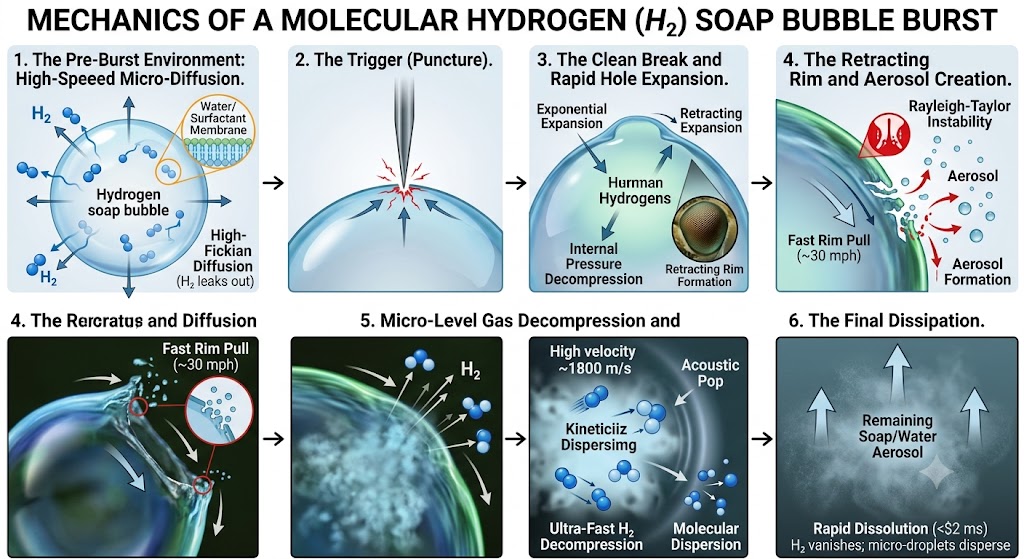
What Happens When a Hydrogen Bubble Bursts?
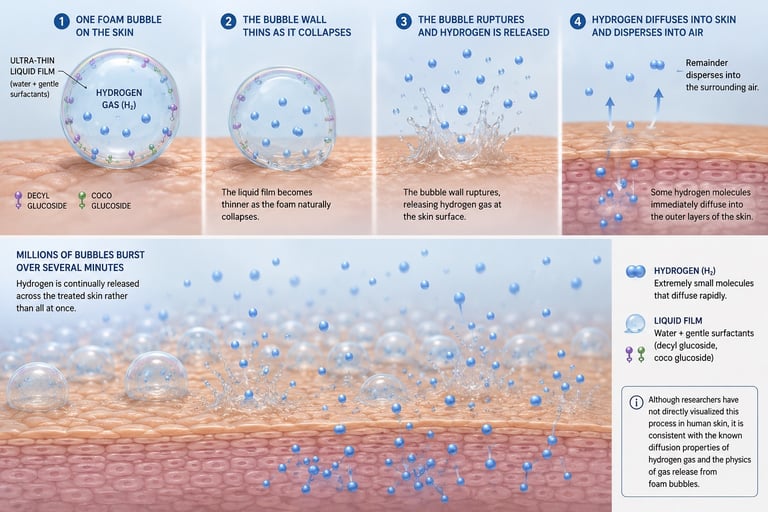
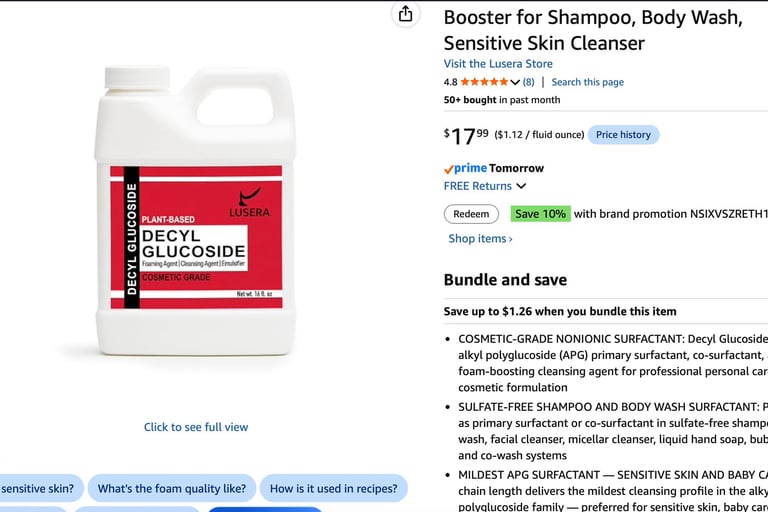
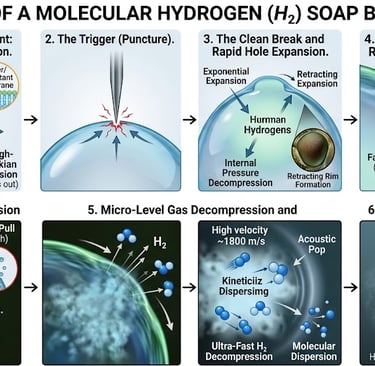
Imagine one microscopic foam bubble resting on your skin. Inside the bubble is hydrogen gas, surrounding the gas is an ultra-thin liquid film containing water and gentle surfactants such as decyl glucoside and coco glucoside. As the foam naturally collapses. The bubble wall becomes thinner, eventually it ruptures. The hydrogen gas is released directly at the skin surface. Because hydrogen molecules are extremely small and diffuse rapidly, some of the gas can immediately begin moving into the outer layers of the skin while the remainder disperses into the surrounding air. Although researchers have not directly visualized this process in human skin, it is consistent with the known diffusion properties of hydrogen gas and the physics of gas release from foam bubbles.When millions of bubbles burst over several minutes, hydrogen is continually released across the treated skin rather than all at once.
Why Foam Works Better Than Water Alone
Foam changes several important physical characteristics it keeps hydrogen in contact with the skin longer. It coats irregular skin surfaces more evenly. It continuously releases hydrogen as bubbles collapse. It reduces runoff compared with plain water. It provides a much larger surface area for hydrogen release. Researchers studying other gas containing foams have also shown that foam can mechanically increase contact with the outer skin layer compared with liquid alone.
Why Your Skin May Feel Dry Immediately After a Hydrogen Foam Shower
Many people notice an interesting sensation immediately after using a hydrogen foam shower, their skin feels slightly dry.This may seem surprising because they have just covered themselves with water based foam, several factors may contribute to the sensation.
What are surfactants and how do they work
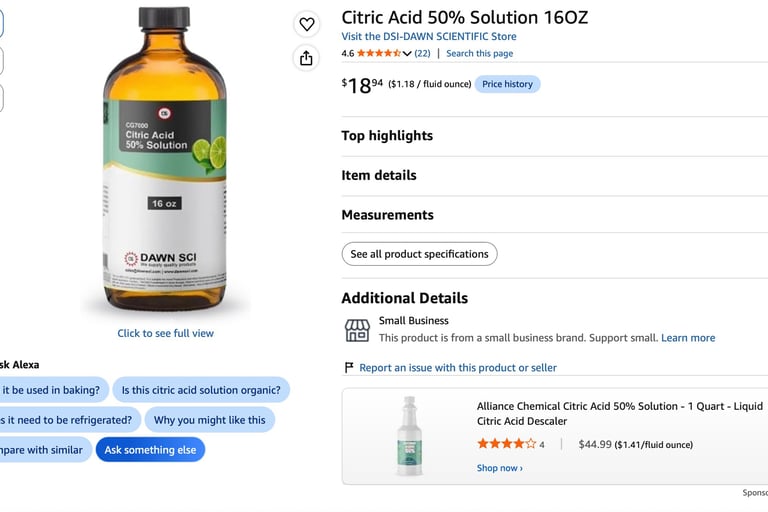
Surfactants are the essential ingredients that make molecular hydrogen foam possible. By themselves, hydrogen gas has extremely low solubility in water and escapes almost immediately because it is the smallest and lightest molecule in the universe. Surfactants reduce the surface tension of water, allowing millions of tiny bubbles to form and temporarily trap molecular hydrogen inside a stable foam. When these hydrogen filled bubbles are poured onto the skin, they dramatically increase the contact time between the gas and the skin's surface compared to hydrogen water alone.
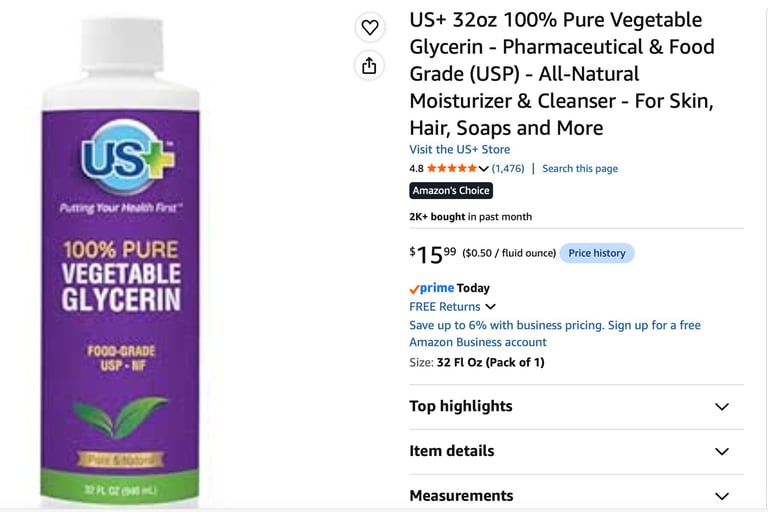
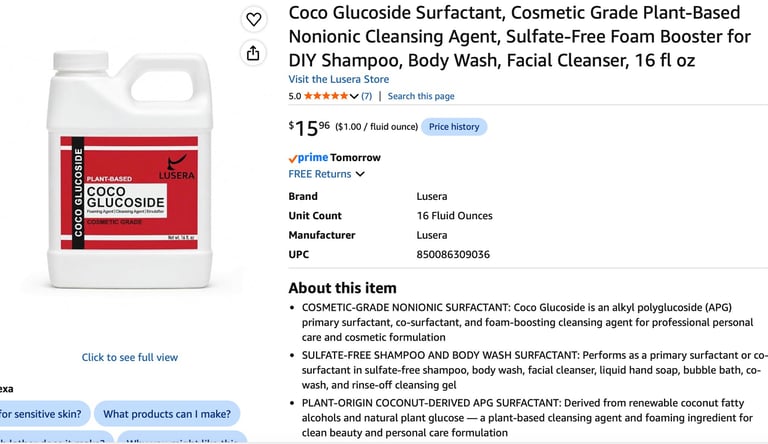
A molecular hydrogen foam concentrate uses Decyl Glucoside as the primary foaming surfactant, producing a rich, creamy foam while remaining exceptionally gentle on the skin. Coco Glucoside works alongside it to improve foam stability, create smaller, denser bubbles, and extend the life of the foam so more hydrogen remains available during application. Vegetable Glycerin acts as a natural humectant, attracting moisture to the skin while also slightly increasing the viscosity of the solution, which helps support a longer lasting foam structure. Finally, 200X Organic Aloe Vera Powder provides soothing, moisturizing, and skin conditioning benefits, helping offset the temporary drying sensation that can occur as hydrogen rich bubbles burst and rapidly evaporate from the skin. Together, these carefully selected ingredients create a gentle, biodegradable foam that captures molecular hydrogen long enough to maximize skin contact while leaving the skin clean, hydrated, and refreshed. Gentle cleansing decyl glucoside and coco glucoside are exceptionally mild cleansers. Even gentle surfactants remove excess skin oils, sweat, environmental contaminants and cosmetic residues. Immediately afterward, the skin may temporarily feel "clean" or slightly tight because some surface lipids have been removed.
https://www.amazon.com/dp/B097LTHS4S?ref=ppx_yo2ov_dt_b_fed_asin_title https://www.amazon.com/dp/B0BXFSL7WG?ref=ppx_yo2ov_dt_b_fed_asin_title
https://www.amazon.com/dp/B0GXTFK4MX?ref=ppx_yo2ov_dt_b_fed_asin_title https://www.amazon.com/dp/B0GXT2XVGH?ref=ppx_yo2ov_dt_b_fed_asin_title
Why Your Skin Often Feels Better a Few Hours Later
One of the more interesting observations reported by many users is that several hours later the earlier dryness disappears. Instead, the skin often feels smoother, softer, more supple, less irritated. Several mechanisms could contribute to this. The skin's natural oils redistribute over the surface, moisture equilibrium returns, the outer skin barrier normalizes after cleansing, reduced oxidative stress may help support healthier barrier function over time, although more research is needed. The result is skin that often feels refreshed rather than stripped.
Why Your Skin May Look Slightly Shiny
Many users also notice a subtle healthy sheen after treatment. This likely reflects several normal skin changes rather than hydrogen itself creating a visible coating. Possible explanations include, a smoother skin surface reflects light more evenly, redistribution of natural skin lipids after cleansing, improved hydration of the outer skin layers, removal of dirt and oxidized surface oils that previously scattered light, Healthy skin naturally reflects light more uniformly than rough, dry skin. Because hydrogen itself is invisible and leaves no residue, any visible glow is more likely due to changes in the skin surface than to hydrogen remaining on the skin.
The Future of Topical Molecular Hydrogen
The greatest challenge in topical hydrogen therapy has always been hydrogen's fleeting nature. The gas is continuously trying to escape. Foam technology offers a practical solution by slowing that escape just long enough to increase skin contact time. Instead of delivering hydrogen in one brief burst, millions of microscopic bubbles provide a gradual release over several minutes.
While research into topical molecular hydrogen is still developing, early studies suggest it may support skin barrier function and improve several objective measures of skin appearance. Further large, controlled clinical trials will be needed to determine the magnitude of these effects and the optimal delivery methods.
Ready for the Hydrogen Glow?
Ordinary water runs off, but microscopic foam locks the world's smallest molecule exactly where your skin needs it most. Ditch the old routine and experience the delayed-release magic for yourself.
Learn more
MDPI Antioxidants: Topical Molecular Hydrogen Pilot Study
Heriot-Watt Review: Using Molecular Simulation to Understand the Skin Barrier
ScienceDirect: Carbon Dioxide Foam Bubbles Enhance Skin Penetration Through the Stratum Corneum
Written by
Jim Mitchell
Founder molecularhydrogenbubbles.com