The Next Evolution in Skincare Why Molecular Hydrogen Foam Outperforms a Traditional Hydrogen Bath
A detailed description of the advantages of using molecular hydrogen foam instead of molecular hydrogen baths.
Jim Mitchell founder molecularhydrogenbubbles.com
5/24/20266 min read
What Is Molecular Hydrogen Foam?
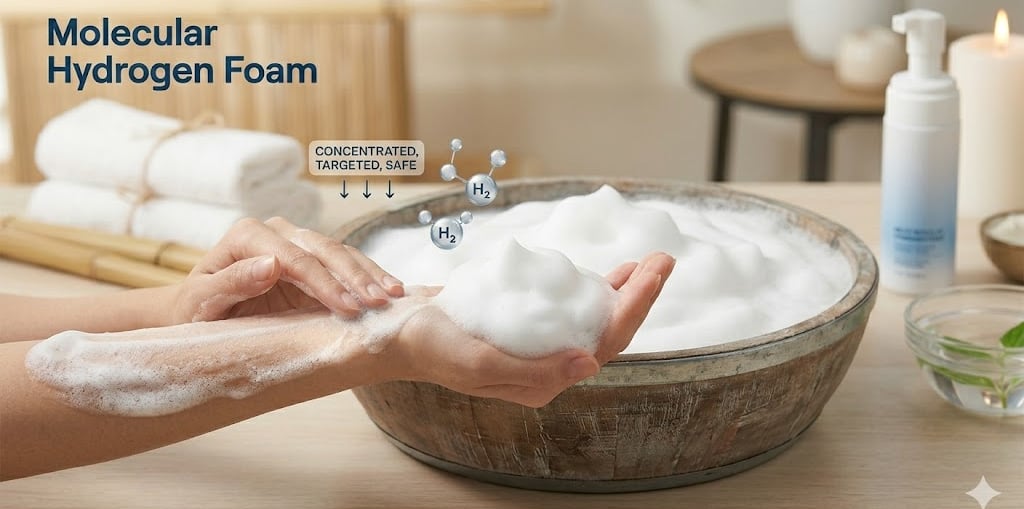
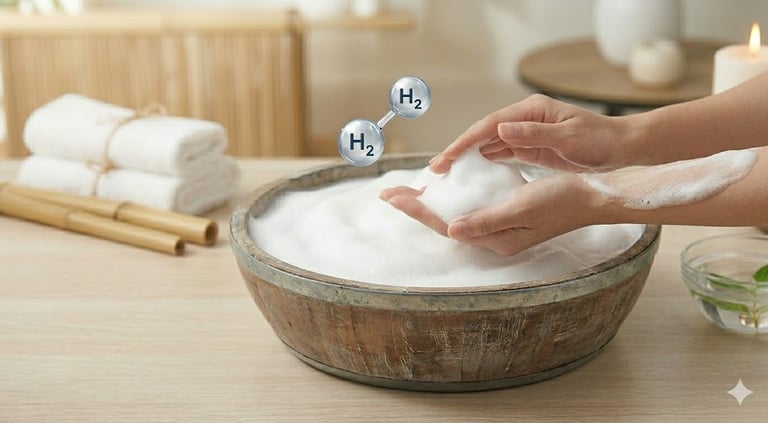
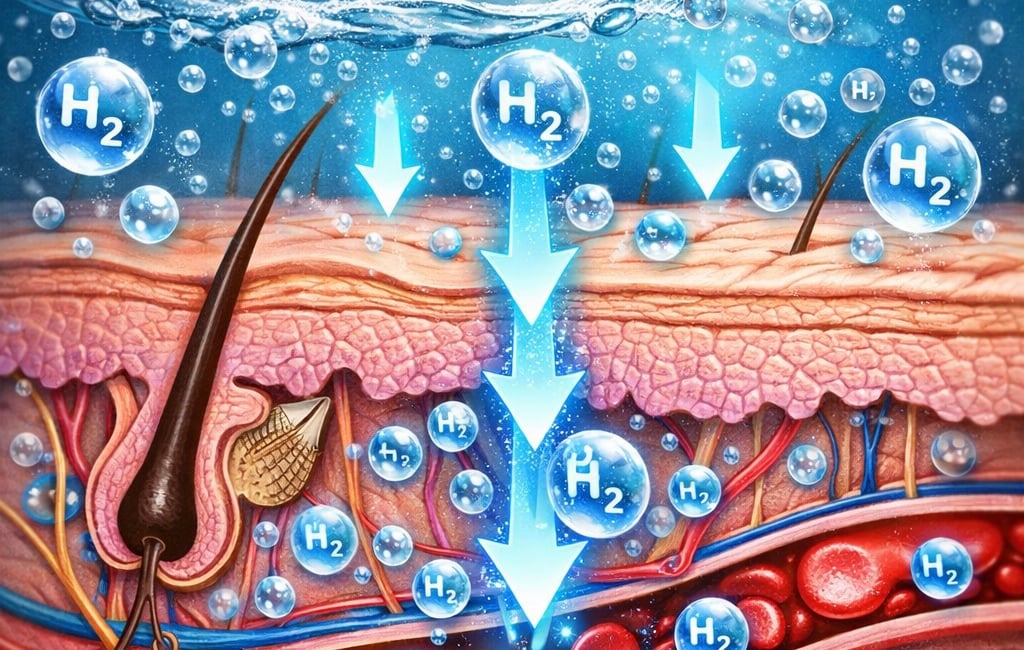
Molecular hydrogen foam is typically created by saturating water or a topical solution with dissolved molecular hydrogen gas (H₂) and transforming it into a stable foam using safe foaming agents or structured water techniques. Instead of immersing the entire body in a bath, the foam is applied directly onto the skin where it clings to the surface for extended contact time. Think of it as creating a “hydrogen-rich microenvironment” directly against the skin.
Why hydrogen Foam is Better Than a Hydrogen Bath?
Longer Skin Contact Time!
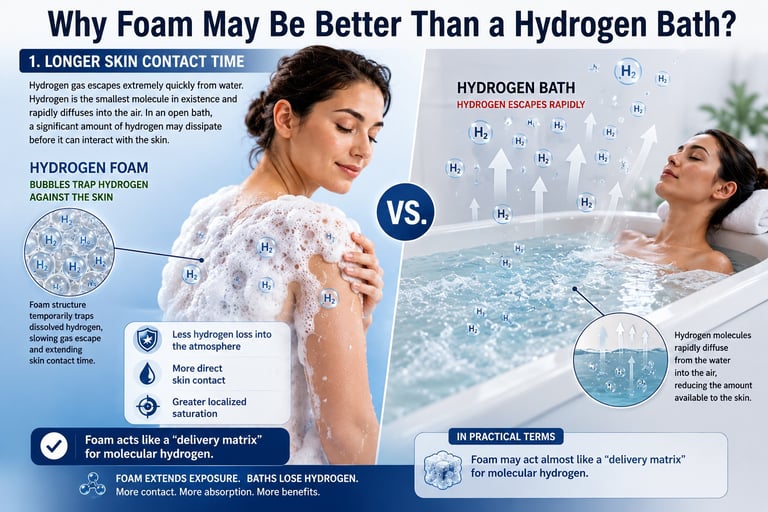
One major limitation of hydrogen baths is that hydrogen gas escapes extremely quickly from water. Hydrogen is the smallest molecule in existence. Once dissolved into water, it rapidly diffuses into the air. In an open bath environment, a significant amount of hydrogen may dissipate before it can interact with the skin. Foam changes this dynamic. The bubbles in hydrogen foam can temporarily trap dissolved hydrogen against the skin surface, slowing down immediate gas escape and potentially increasing local exposure time.This means less hydrogen loss into the atmosphere more direct skin contact greater localized saturation, in practical terms, foam may act almost like a “delivery matrix” for molecular hydrogen.
Better Targeted Application
Hydrogen baths expose the entire body equally, whether needed or not. Foam allows precise application to joints, muscles, face, neck, scalp, areas of inflammation and athletic recovery zones. This targeted approach can improve efficiency while using less hydrogen overall. For athletes or people with localized discomfort, this could be especially useful.
Increased Surface Adhesion
Water runs off the body quickly, hydrogen foam sticks, this matters because hydrogen transfer through the skin likely depends partly on exposure duration and surface contact consistency. Foam maintains a persistent interface between hydrogen rich moisture and the skin barrier. This allows for better hydration longer diffusion opportunity improved topical penetration dynamics.
Hydrogen Baths Waste Large Amounts of Gas
Hydrogen baths typically require large water volumes continuous hydrogen generation and significant gas production much of that hydrogen never interacts with the body and instead escapes into the room. Foam applications dramatically reduces hydrogen waste because the gas is concentrated into a smaller medium applied directly where needed. This makes hydrogen therapy more portable more cost efficient and more accessible.
Foam Enhance Skin Appearance
Many users report temporary cosmetic effects after topical hydrogen foam application, including increased skin brightness smoother appearance temporary glow that last for days, improved softness reduced dryness appearance. These effects relate to hydration, reduced oxidative stress at the skin surface, or altered light reflection from moisturized skin. Research into topical molecular hydrogen is still emerging, but early studies suggest hydrogen can help reduce oxidative damage in skin tissues.
Foam Works Well With Heat and Sauna Use
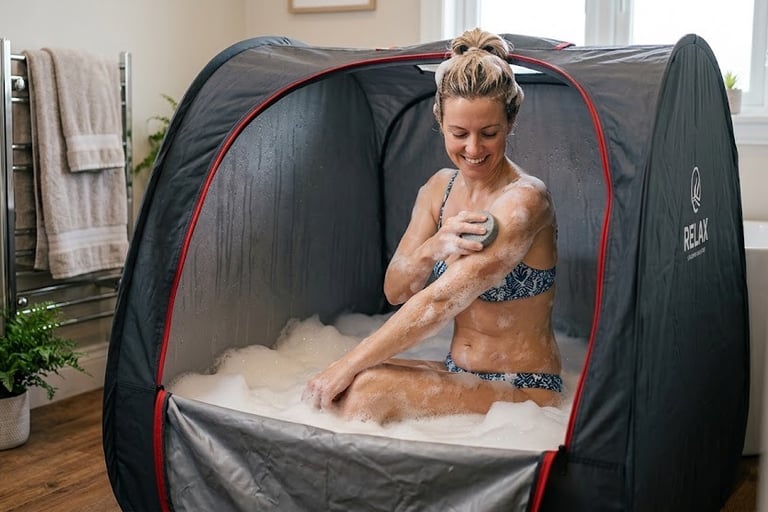
Hydrogen foam pairs especially well with sauna sessions because heat can help increase circulation, open pores, improve skin hydration, and potentially enhance transdermal exchange dynamics. Applying hydrogen foam before or during sauna use also helps maintain skin moisture while exposing warmed skin to hydrogen rich foam. Although this approach is not yet as widely known as hydrogen baths, many users report softer skin and a more refreshed post sauna recovery sensation.
Foam Reduces the Hydrogen Escape Problem
One of the biggest engineering challenges in all hydrogen therapies is retention. Hydrogen escapes from water, through tubing, from open containers Into surrounding air foam structures temporarily slow this diffusion by creating microscopic bubble compartments that retain hydrogen near the application surface. This does not make hydrogen permanent the gas still dissipates quickly, it improves short term exposure efficiency compared to standing bath water.
Hydrogen Foam vs. Hydrogen Bath Comparison
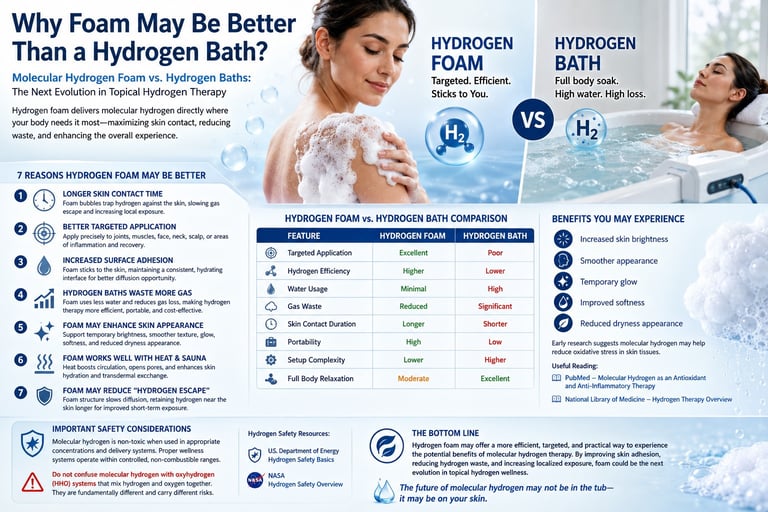
Hydrogen foam and hydrogen baths each offer unique advantages, but they differ significantly in efficiency and application. Hydrogen foam provides excellent targeted application, allowing users to focus on specific areas of the body, while hydrogen baths offer poor targeting because the entire body is exposed equally. Foam also tends to use hydrogen more efficiently, requiring minimal water and producing less gas waste. In contrast, hydrogen baths typically require large amounts of water and can result in significant hydrogen loss. Another advantage of foam is its longer skin contact duration, whereas hydrogen dissolved in bath water dissipates more quickly. Hydrogen foam is also more portable and generally simpler to set up, while hydrogen baths involve larger equipment and greater complexity. However, hydrogen baths may provide a more immersive full body relaxation experience, while hydrogen foam offers a more moderate relaxation effect.
Important Safety Considerations
Molecular hydrogen itself is non toxic, but safety depends heavily on concentration and delivery method. Proper molecular hydrogen wellness systems typically remain within controlled, non-combustible concentration ranges. Avoid confusing molecular hydrogen foam with oxyhydrogen or “HHO” systems that combine hydrogen and oxygen together in the same gas stream. These are fundamentally different technologies with very different combustion characteristics. For hydrogen safety information U.S. Department of Energy – Hydrogen Safety Basics NASA Hydrogen Safety Overview. (https://www.energy.gov/cmei/fuels/safety-codes-and-standards)
The Bottom Line
Hydrogen baths introduced many people to topical molecular hydrogen therapy, but hydrogen foam is a a more efficient and practical advancement. By improving skin adhesion, reducing hydrogen loss, extending localized exposure, and enabling targeted application, foam delivers similar wellness benefits with greater efficiency and convenience. Research is still evolving, and many claims remain exploratory, but interest in topical hydrogen technologies continues to grow among wellness practitioners, athletes, recovery specialists, and skincare enthusiasts. The future of molecular hydrogen may not be soaking in a tub, it may be applying hydrogen directly to the skin within molecular hydrogen nano bubbles.
If you’re exploring the future of molecular hydrogen wellness
Hydrogen foam may be one of the most promising innovations yet. With targeted application, reduced hydrogen waste, improved skin contact time, and greater portability, foam technology could change how people use topical hydrogen therapy at home, in recovery settings, and in skincare routines. Whether you’re an athlete, wellness enthusiast, sauna user, or simply curious about emerging hydrogen technologies, now is the time to learn more about how hydrogen foam works and why interest in it is growing so rapidly. Explore the science, understand the safety aspects and experience the difference. The next generation of topical hydrogen therapy may not come from soaking in a bathtub it may come from applying hydrogen exactly where your body needs it most.
Coming next
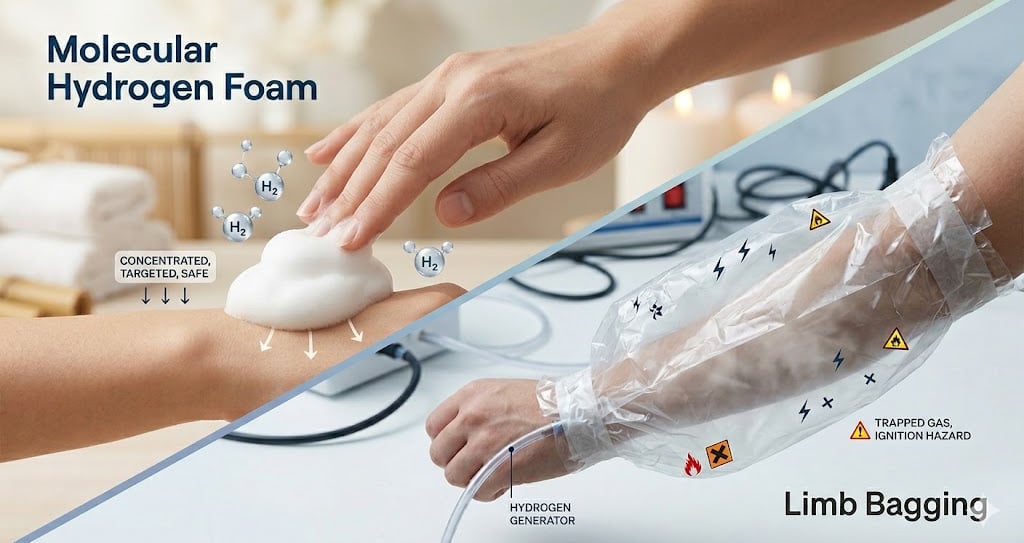
One of the most dangerous misconceptions in DIY molecular hydrogen therapy. Some experimenters are placing plastic bags around arms or legs and filling them with hydrogen gas in an attempt to create a “localized hydrogen chamber.” While it may sound innovative, this practice can unintentionally create a confined, highly combustible environment directly against the body. In our next post, we’ll break down why trapping hydrogen gas inside sealed plastic spaces dramatically changes the safety profile of hydrogen therapy and why static electricity, heat, and gas accumulation can turn a wellness experiment into a serious ignition hazard.
What if the future of topical wellness isn’t soaking in a bathtub… but applying molecular hydrogen directly to the skin? Molecular hydrogen foam is rapidly emerging as one of the most intriguing innovations in hydrogen therapy. By improving skin contact time, reducing hydrogen waste, allowing targeted application, and pairing perfectly with sauna and recovery routines, hydrogen foam may offer major advantages over traditional hydrogen baths. Athletes, wellness enthusiasts, skincare users, and recovery specialists are beginning to explore how this lightweight hydrogen-rich foam could change the future of topical hydrogen use. But how does it actually work? Why does foam retain hydrogen better than water alone? And could this technology solve one of the biggest problems in hydrogen therapy — rapid hydrogen escape? In this post, we break down the science, the practical advantages, the cosmetic potential, the safety considerations, and why hydrogen foam may represent the next evolution of molecular hydrogen wellness.
Written by
Jim Mitchell
founder molecularhydrogenbubbles.com