Using Molecular Hydrogen with a CPAP Machine: Why Your Hydrogen Gas Detector May Alarm and What to Do About It
Unlock the benefits of pairing molecular hydrogen with your CPAP without the midnight wake up calls! This short guide explains why exhaled hydrogen gas accidentally triggers bedroom gas detectors and shares quick, practical adjustments to keep your alarms quiet and your sleep therapy on track.
Jim Mitchell founder molecularhydrogenbubbles.com
5/30/20263 min read
Many people who use molecular hydrogen therapy also rely on a CPAP machine for sleep apnea. A common question is whether molecular hydrogen can be used alongside CPAP therapy and why some users notice that a hydrogen gas detector in the room occasionally activates during treatment.
The short answer is yes, molecular hydrogen can often be used alongside CPAP therapy when done according to the manufacturer's instructions and under the guidance of a healthcare professional. However, there is an important consideration that many users do not anticipate: the hydrogen you exhale can sometimes be detected by sensitive gas monitoring equipment.
Why Hydrogen Is Detected in the Room
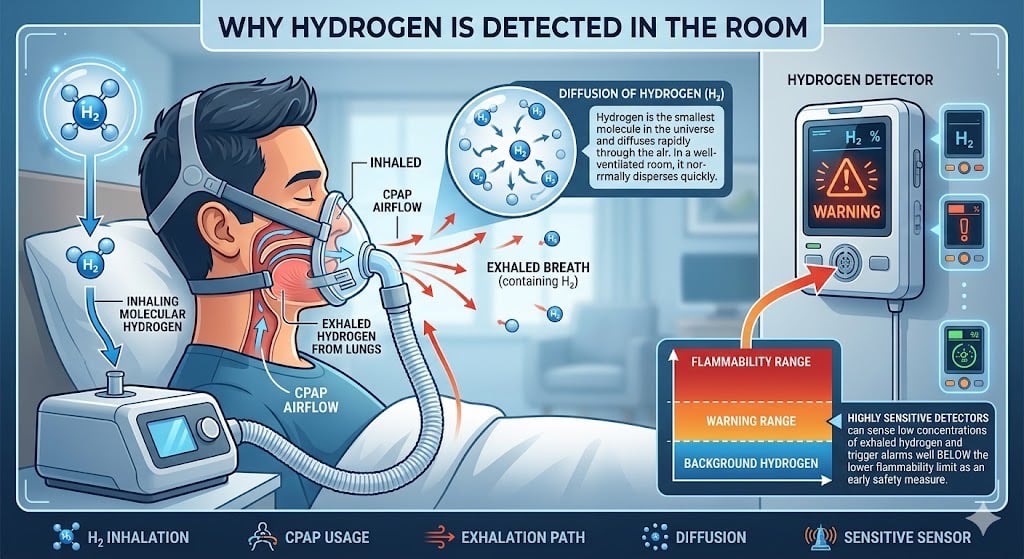
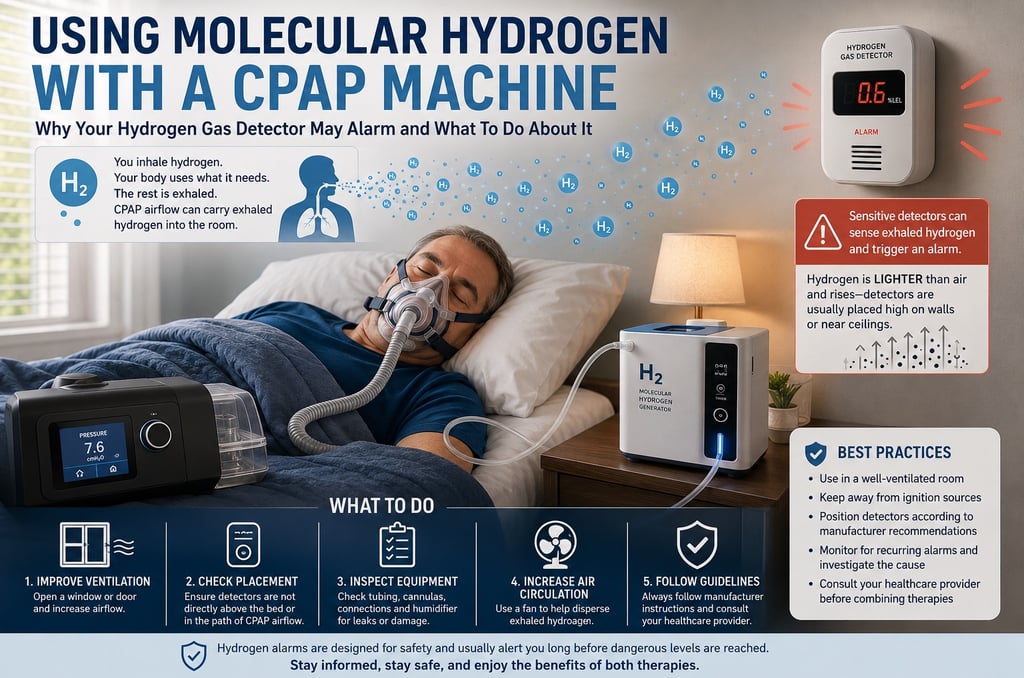
When you inhale molecular hydrogen, not all of the gas is absorbed by the body. A portion of the hydrogen is exhaled through your breath. If you are using a CPAP machine, the airflow from the CPAP can continuously move exhaled gases into the surrounding room.
Hydrogen is the smallest molecule in the universe and diffuses rapidly through the air. In a well-ventilated room, it normally disperses quickly. However, if a hydrogen detector is installed nearby, particularly one designed to detect very low concentrations of hydrogen gas, the detector may sense the hydrogen being exhaled and trigger a warning or alarm. Hydrogen safety systems commonly begin issuing warnings at concentrations well below the lower flammability limit as an early safety measure.
Why CPAP Users May Notice This More Often
CPAP machines create a continuous flow of air throughout the night. This airflow can direct exhaled hydrogen toward a detector Increaseing the volume of hydrogen rich air entering the room. Cause hydrogen to accumulate near the ceiling before it disperses. Create localized pockets of higher hydrogen concentration near the sleeping area. Because hydrogen is lighter than air, it naturally rises. Many hydrogen detectors are intentionally installed high on walls or near ceilings to improve detection performance.
Is This Dangerous?
In most home-use situations, an alarm caused by exhaled hydrogen does not necessarily indicate a dangerous condition.
Hydrogen becomes flammable only when it reaches much higher concentrations in air. Many hydrogen safety systems are designed to alert users long before concentrations approach those levels. Industrial hydrogen detectors often activate ventilation systems when concentrations reach approximately 1% hydrogen by volume and alarm at higher levels.
That said, any hydrogen alarm should be taken seriously until the source is identified. Always follow the safety instructions provided by your hydrogen therapy equipment manufacturer.
What To Do If Your Detector Alarms
Improve Ventilation
Open a window or door and increase room airflow. Many hydrogen equipment manufacturers recommend operating hydrogen-generating devices in well-ventilated spaces.
Check Detector Placement
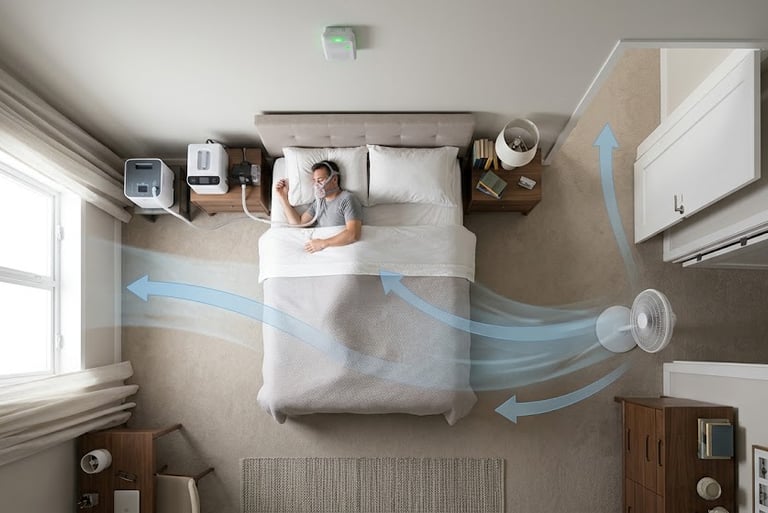
If the detector is mounted directly above your bed or immediately adjacent to your CPAP exhaust airflow, it may be detecting exhaled hydrogen rather than room-wide accumulation. Hydrogen detector placement should account for airflow patterns, ventilation, and potential hydrogen sources.
Verify Proper Equipment Operation
Inspect Hydrogen tubing, Cannulas, CPAP connections, Humidifier chambers, Machine fittings, Ensure there are no leaks or damaged components.
Increase Air Circulation
A ceiling fan or room fan can help disperse exhaled hydrogen more rapidly and reduce localized concentrations around the detector.
Follow Manufacturer Recommendations
Always operate molecular hydrogen equipment according to the manufacturer's instructions. Do not modify your CPAP machine or hydrogen generator without guidance from the manufacturer or a qualified professional.
Best Practices for Combining Molecular Hydrogen and CPAP Therapy
For individuals who use both therapies use molecular hydrogen equipment in a well ventilated room. Keep hydrogen generators away from ignition sources, periodically inspect tubing and fittings. Monitor for recurring alarms and investigate the cause. Consult your healthcare provider before combining therapies if you have any medical concerns.
Final Thoughts
If your hydrogen gas detector activates while using molecular hydrogen therapy and a CPAP machine, the most likely explanation is that the detector is sensing hydrogen that you are exhaling. Because CPAP systems continuously move air, they can increase the amount of exhaled hydrogen reaching nearby sensors.
In most cases, improving ventilation and evaluating detector placement resolves the issue. The alarm should never be ignored, but it also does not automatically mean there is a dangerous hydrogen buildup. Understanding how hydrogen behaves in indoor environments can help you use both therapies safely and confidently.
References
U.S. Department of Energy Hydrogen Safety Guidance: https://www.hydrogen.energy.govNational Fire Protection Association Hydrogen Technologies Code: https://www.nfpa.orgMolecular Hydrogen Research Database: https://www.hydrogenstudies.com
Written by
Jim Mitchell
Founder molecularhydrogenbubbles.com